

The research lines at IFLYSIB are grouped into the following areas:
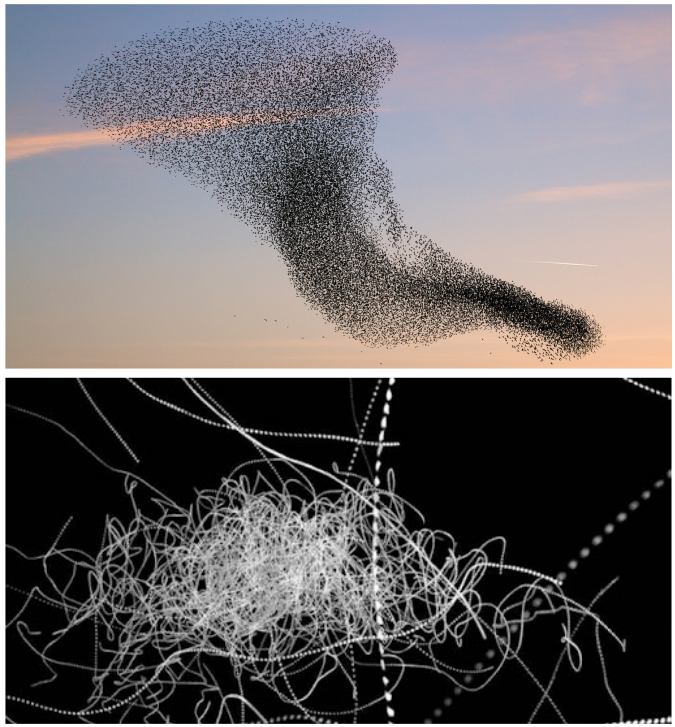
Statistical Biophysics (BiEs)
The group studies collective phenomena in biological systems. Using statistical physics techniques, we seek to understand the behavior of biological systems at different scales, such as the growth of cell colonies and tissues, the collective movement of animal groups (insect swarms and bird flocks), or large-scale properties of ecosystems (tropical forests). The emphasis is on constructing and studying minimal models that allow for the interpretation of emergent properties with the fewest ingredients and assumptions. We perform both numerical and analytical calculations and collaborate with national and foreign experimental groups.
Science Education Research Group
The Science Education Research Group (GDC) is an interdisciplinary workspace that originated in the mid-1980s at the Physics Teaching Workshop (Department of Physics, Faculty of Exact Sciences, UNLP). The GDC’s current research lines focus mainly on the construction of knowledge regarding issues in the fields of Natural Sciences, Environmental, and Health Education, together with teachers, students, members of organizations, and other social actors. Educational proposals and resources are also analyzed and designed, as well as tools and activities for the public communication of science; additionally, consultancy services are developed. In a triple helix involving research, teacher training, and educational transformation, collaborative work is carried out with schools, teacher training institutes, and other educational contexts. WEB
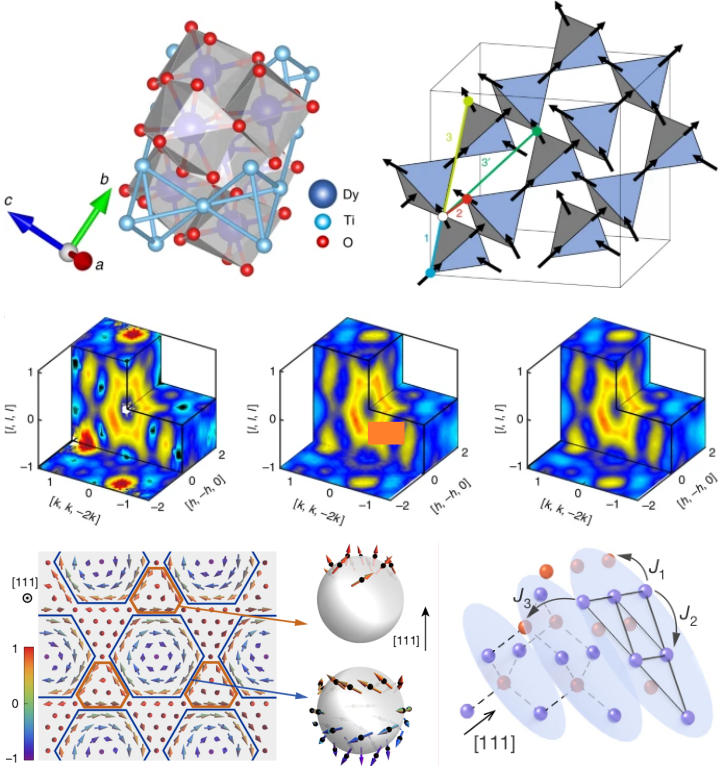
Condensed Matter and Strongly Correlated Systems
This research area includes strongly correlated electron systems, frustrated magnetic systems, electronic and magnetic topological phases, transport phenomena, quantum criticality, and new forms of electronic order. The group includes several researchers, thesis students, and fellows who develop basic and applied research activities using theoretical, computational, and experimental tools.
Statistical Mechanics of Liquids and Soft Condensed Matter
This group studies thermodynamic, structural, and electronic properties of classical and fermionic liquids, as well as complex and confined liquids. It also addresses the characterization of thermal and dielectric properties of biological tissues, and the dynamic and structural properties of systems composed of granular matter. The group consists of several researchers, thesis students, and fellows who perform basic and applied research using theoretical, computational, and experimental tools. WEB

Soft and Active Matter (ABCMat)
In a general sense, we work to understand the dynamics, structure, and thermodynamics of “particle” systems, understanding them in a broad sense. This includes liquids in metastable phases and glassy systems, hydrophobic interaction, polymeric solutions and liquids, colloids, and surfactants.